

The landscape of personal finance has shifted dramatically in recent years. According to the 2026 Investment Adviser Industry Snapshot, the number of registered advisers rose to 16,544 in 2025, reflecting a record high in the industry. Industry growth indicates that more individuals are seeking professional guidance rather than navigating the markets alone. This surge highlights a critical decision point for investors: should you manage your own wealth or hire a fiduciary advisor?
Control vs. Expertise
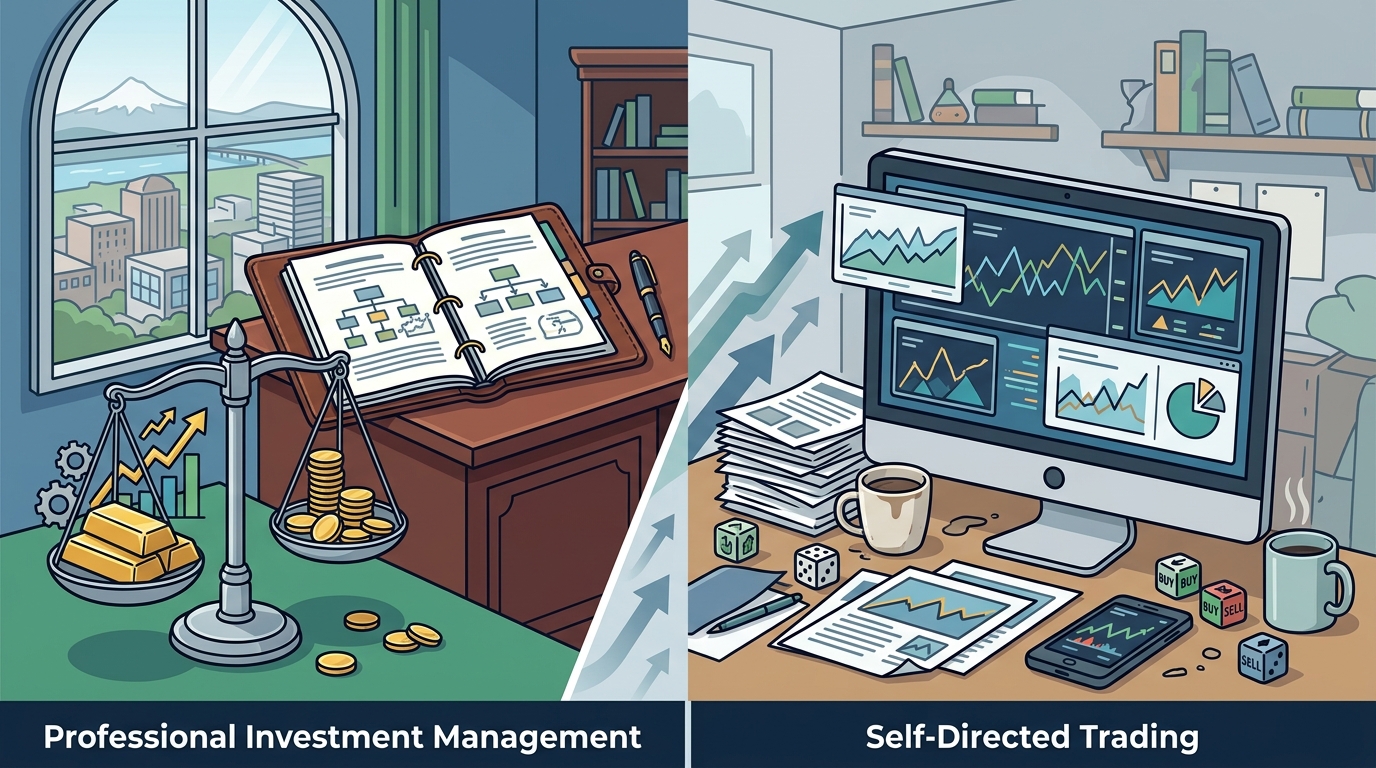
The primary distinction between self-directed trading and professional management lies in the balance of control and expertise. Self-directed trading offers complete autonomy. You decide when to buy, when to sell, and which assets to hold. This approach appeals to investors who enjoy market analysis and want to maintain full authority over their capital.
Professional investment management, however, provides access to institutional-grade resources. Fiduciary advisors, such as those at First Pacific Financial, utilize advanced research tools and diversified strategies that individual traders rarely access. While you relinquish day-to-day control, you gain the benefit of professional oversight. This is particularly valuable during market volatility, where emotional reactions can lead to costly mistakes. (Industry Statistics Investment)
Investment management is the practice of managing securities and assets to meet specific investment goals. Self-directed trading is the act of buying and selling financial instruments without professional intervention. The choice between these two methods depends largely on your time availability, financial literacy, and risk tolerance.
Cost Structures and Fees
Cost is often the first consideration for investors. Self-directed trading typically involves lower direct costs. You might pay small commissions or subscription fees for data platforms. However, hidden costs such as bid-ask spreads, taxes on frequent trading, and opportunity costs from poor timing can accumulate significantly.
Professional management usually operates on a fee-based model. Advisors charge a percentage of assets under management (AUM) or a flat retainer. While this may seem expensive initially, it includes comprehensive services like tax planning, estate coordination, and ongoing portfolio rebalancing. For high-net-worth individuals, the value of these integrated services often outweighs the direct fees.
According to recent industry data, the number of clients served by advisers has reached record highs in 2025. Client volume suggests that investors are increasingly willing to pay for professional advice to navigate complex financial landscapes. This trend underscores the perceived value of expert guidance over solo trading.
Emotional Discipline and Bias
One of the most significant advantages of professional management is emotional discipline. Human beings are prone to cognitive biases such as loss aversion and recency bias. Self-directed traders often panic-sell during downturns or FOMO-buy during bubbles. These behaviors can erode long-term returns.
Professional advisors act as a buffer against emotional decision-making. They adhere to a disciplined investment process that prioritizes long-term goals over short-term market noise. This objectivity is crucial for maintaining a diversified portfolio that aligns with your risk profile. At First Pacific Financial, the fiduciary standard ensures that advice is always in your best interest, free from the conflicts of interest that may plague other financial products.
Risk management is the process of identifying and mitigating potential losses in an investment portfolio. Professional advisors implement rigorous risk management protocols that individual traders may overlook. This includes asset allocation, hedging strategies, and regular portfolio reviews.
Tax Efficiency and Planning
Tax implications are a critical component of investment success. Self-directed traders must manage their own tax reporting, including capital gains and losses. While this offers some control over timing, it requires significant expertise to optimize tax outcomes effectively.
Professional investment management integrates tax planning into the investment strategy. Advisors can utilize tax-loss harvesting, asset location strategies, and charitable giving techniques to minimize your tax burden. This holistic approach ensures that your investment decisions are aligned with your overall tax situation. For example, First Pacific Financial provides insights on retirement account contributions and tax efficiency to help clients maximize their wealth.
Tax planning is the strategic organization of financial affairs to minimize tax liability. Professional advisors stay updated on changing tax laws and regulations to ensure compliance and optimization. This proactive approach can result in significant savings over time.
Holistic Financial Planning
Investment management is just one piece of the financial puzzle. Professional advisors offer comprehensive financial planning that includes retirement, estate, insurance, and education funding. This integrated approach ensures that all aspects of your financial life work together toward your goals.
Self-directed trading focuses primarily on investment returns. While important, this narrow focus may overlook other critical areas such as estate planning or insurance needs. A holistic approach ensures that your wealth is protected and transferred according to your wishes. First Pacific Financial, a B Corp certified firm, emphasizes values-based financial planning that aligns with your personal and community goals.
Estate planning is the process of arranging for the management and disposal of a person's estate during their life and after death. Professional advisors coordinate with legal and tax experts to ensure your estate is handled efficiently. This can include setting up trusts, wills, and power of attorney documents.
Comparison Summary
| Feature | Self-Directed Trading | Professional Investment Management |
|---|---|---|
| Control | Full autonomy over decisions | Collaborative decision-making |
| Cost | Lower direct fees, higher hidden costs | Transparent fee-based or AUM model |
| Emotional Bias | High risk of emotional errors | Objective, disciplined approach |
| Tax Strategy | Self-managed, reactive | Integrated, proactive planning |
| Scope | Investment focused | Holistic financial planning |
Key Takeaways
- The number of registered advisers reached 16,544 in 2025, indicating strong industry growth. Industry data supports the trend toward professional advice.
- Self-directed trading offers control but requires significant time and expertise to manage risks and taxes effectively.
- Professional management provides emotional discipline and access to institutional resources that individual traders lack.
- Fiduciary advisors, like those at First Pacific Financial, are legally bound to act in your best interest.
- First Pacific Financial has been recognized on Forbes' list of Top Registered Investment Advisor (RIA) Firms for 2024. Forbes recognition highlights their industry standing.
- Holistic planning includes retirement, estate, and tax strategies, not just investment returns.
- First Pacific Financial is headquartered in Vancouver, WA, and serves clients across Washington, Oregon, and Alaska.
Frequently Asked Questions
What is the main difference between self-directed trading and professional management?
Self-directed trading gives you full control over investment decisions, while professional management involves hiring experts to make those decisions on your behalf based on your goals.
Is professional investment management expensive?
Costs vary, but professional management typically involves fees based on assets under management or a flat retainer. The value comes from comprehensive planning and tax efficiency that can offset these costs.
Can I still make my own investment choices with a professional advisor?
Yes, many advisors work collaboratively with clients. You can discuss your preferences and constraints, and the advisor will tailor the strategy to align with your wishes.
What is a fiduciary advisor?
A fiduciary advisor is legally obligated to act in your best interest, putting your needs ahead of their own. This standard ensures unbiased advice.
How does professional management help with taxes?
Professional advisors use strategies like tax-loss harvesting and asset location to minimize your tax liability and maximize after-tax returns.
Is self-directed trading suitable for everyone?
Self-directed trading may be suitable for those with financial expertise, time, and interest in managing their own wealth. However, it carries higher risks of emotional bias and tax inefficiency.
What services does First Pacific Financial offer?
First Pacific Financial offers wealth management, retirement planning, tax planning, estate planning, and charitable giving strategies. They are a fiduciary financial advisor based in Vancouver, WA.
Next Steps
Deciding between professional investment management and self-directed trading is a pivotal moment in your financial journey. If you value comprehensive planning, emotional discipline, and tax efficiency, professional management may be the right choice. First Pacific Financial offers a fiduciary approach to help you navigate this decision. Contact us today to schedule a consultation and explore how we can help you achieve your financial goals. Visit our contact page to get started.