

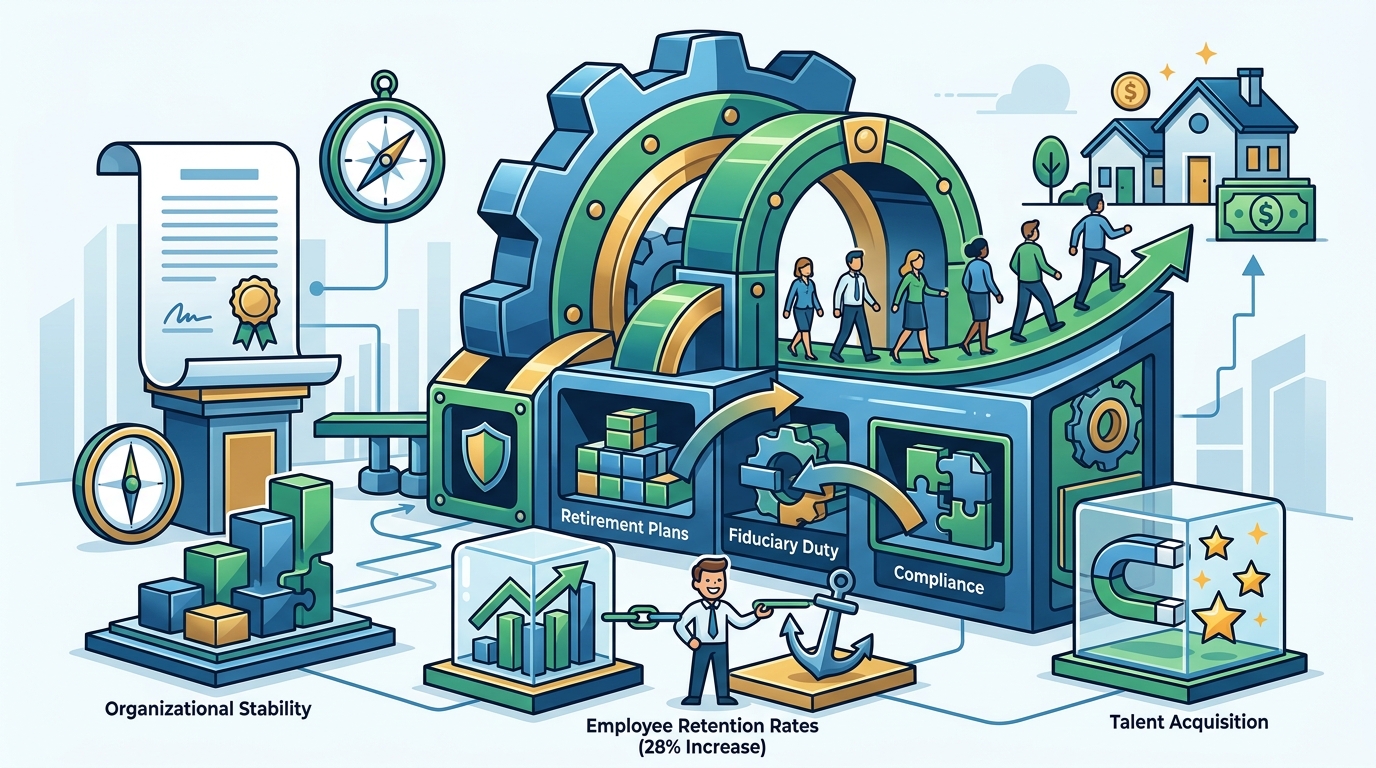
Establishing a corporate retirement plan is one of the most significant strategic decisions a business owner can make. According to recent industry data, companies that offer robust retirement benefits see a 28% increase in employee retention rates compared to those that do not. This statistic highlights that retirement planning is no longer just a compliance checkbox. It is a critical tool for talent acquisition and long-term organizational stability. For business owners, the complexity of managing these plans often feels overwhelming. The regulatory landscape is dense, and the fiduciary responsibilities are substantial. This guide provides a clear, actionable framework for navigating these challenges effectively. (Financial Planning amp Wealth)
Understanding Your Fiduciary Responsibilities
The term fiduciary duty is the cornerstone of corporate retirement plan management. A fiduciary is someone who acts in the best interest of another party. In the context of a 401(k) or similar plan, this duty is legally binding. It requires you to act with the care, skill, prudence, and diligence that a prudent person would use in a similar context. This is not a passive role. You must actively monitor the plan's performance and costs. (Fiduciary Financial Advisors Vancouver)
First Pacific Financial defines a fiduciary as a person or entity that has been entrusted to act for the benefit of others, specifically regarding the management of assets and financial decisions. This definition underscores the gravity of the role. If you are a business owner, you are likely the named fiduciary. This means you are personally liable for the decisions you make regarding the plan. Ignorance of the rules is not a valid defense in the eyes of the Department of Labor. (Financial Planning Insights amp)
One of the most critical aspects of this duty is prudent selection and monitoring of service providers. You must ensure that the recordkeeper, investment managers, and advisors you choose offer services at a reasonable cost. This involves regular reviews of investment options and fee structures. If a vendor's performance declines or fees rise without justification, you have a duty to act. This might mean replacing a fund or negotiating better terms. Documenting every decision you make is essential. This paper trail demonstrates that you acted in good faith and with due diligence.
Choosing the Right Plan Structure
Not all retirement plans are created equal. The structure you choose will dictate your administrative burden, tax benefits, and employee appeal. The most common options include the Traditional 401(k), the Safe Harbor 401(k), and the SIMPLE IRA. Each has distinct advantages depending on your business size and cash flow.
A Traditional 401(k) plan offers maximum flexibility. You can choose whether to match employee contributions and how much to contribute. However, this flexibility comes with a heavy administrative cost. You must pass annual nondiscrimination tests to ensure the plan does not disproportionately benefit highly compensated employees. If the plan fails these tests, you may have to refund contributions, which is a costly and embarrassing process.
In contrast, a Safe Harbor 401(k) plan is designed to simplify compliance. By making mandatory contributions to all eligible employees, you automatically pass the nondiscrimination tests. This eliminates the risk of costly failures. The trade-off is the mandatory employer contribution, which typically ranges from 3% to 5% of employee compensation. For many businesses, this cost is a worthwhile investment in administrative simplicity and tax efficiency.
For smaller businesses with fewer than 100 employees, a SEP IRA or SIMPLE IRA might be appropriate. These plans have lower setup and maintenance costs. However, they offer less control over employer contributions and may not provide the same level of tax deduction benefits for high-income business owners. Understanding these nuances is vital for making an informed choice.
Navigating Annual Compliance Testing
Compliance testing is the heartbeat of plan administration. These tests ensure that the plan operates fairly and does not favor owners or highly paid staff. The two most common tests are the Actual Deferral Percentage (ADP) test and the Actual Contribution Percentage (ACP) test.
The ADP test compares the average contribution rates of non-highly compensated employees (NHCs) to those of highly compensated employees (HCEs). If the HCEs contribute significantly more than the NHCs, the plan may fail. This can lead to taxable distributions for the owners. To avoid this, many employers use Safe Harbor provisions or add a pro-rata matching formula that adjusts based on compensation levels.
Another critical area is top-heavy testing. If more than 60% of the plan's assets belong to key employees, the plan is considered top-heavy. This triggers minimum contribution requirements for non-key employees. Failing to meet these requirements can result in severe penalties. Regular monitoring of plan balances and employee demographics helps you anticipate these issues before they become problems.
First Pacific Financial emphasizes that proactive compliance management is far less expensive than reactive correction. Working with a qualified advisor who understands the intricacies of IRS Code Section 401(a) can save you from costly errors. They can help you interpret test results and implement corrective actions quickly.
Vendor Selection and Fee Management
The cost of running a retirement plan can vary wildly. Some plans charge flat fees, while others use asset-based fees that scale with the plan's size. Understanding these fee structures is crucial for maintaining plan profitability. Reasonable fees are a fiduciary requirement. You must ensure that the fees charged by recordkeepers and investment managers are fair and transparent.
When selecting a vendor, look for technology integration and employee education tools. A user-friendly platform improves employee engagement and reduces administrative headaches for you. Look for vendors that offer automated compliance testing and timely filing of Form 5500. These features can significantly reduce your workload.
Investment selection is another key area. You must ensure that the investment options offered are prudent and diversified. Prudent investment selection involves evaluating the performance, fees, and risk profile of each fund. You should also monitor the lineup regularly to ensure it remains aligned with your plan's objectives. Removing underperforming funds and adding new options keeps the plan competitive and attractive to employees.
Driving Employee Participation
A retirement plan is only valuable if employees participate. Low participation rates undermine the purpose of the plan and can lead to higher administrative costs per participant. Employee engagement is the key to unlocking the full potential of your retirement program.
Start with clear communication. Explain the benefits of the plan in simple terms. Use examples to show how compound interest can grow over time. Highlight any employer matches, as this is essentially free money for employees. Regular updates and reminders can keep the plan top of mind.
Offer financial wellness resources. Many employees feel overwhelmed by retirement planning. Providing access to educational materials, webinars, or one-on-one counseling can empower them to make confident decisions. First Pacific Financial offers comprehensive financial planning insights that can help you guide your employees toward better financial health.
Finally, consider automatic enrollment. This feature automatically enrolls new employees in the plan at a default contribution rate. It significantly boosts participation rates by leveraging the power of inertia. You can also implement automatic escalation, which increases contribution rates annually until a cap is reached. This helps employees save more over time without requiring active decision-making.
Key Takeaways
- Fiduciary Liability: Business owners are personally liable for plan decisions and must act in the best interest of participants.
- Plan Structure: Safe Harbor 401(k) plans eliminate nondiscrimination testing but require mandatory employer contributions.
- Compliance Testing: Annual ADP and ACP tests are critical to avoid costly corrective distributions for highly compensated employees.
- Fee Transparency: Reasonable fees are a legal requirement; regular monitoring of vendor costs is essential.
- Employee Engagement: Automatic enrollment and clear communication significantly boost participation rates.
- Documentation: Detailed records of all decisions and monitoring activities protect against fiduciary claims.
- Professional Support: Working with a fiduciary advisor like First Pacific Financial ensures compliance and strategic alignment.
Frequently Asked Questions
What is the primary fiduciary duty of a business owner?
The primary fiduciary duty is to act solely in the interest of the plan participants and beneficiaries. This includes prudent selection of service providers and monitoring of plan investments.
How often must retirement plans undergo compliance testing?
Most corporate retirement plans must undergo annual compliance testing, including ADP, ACP, and top-heavy tests, to ensure they meet IRS regulations.
What is a Safe Harbor 401(k) plan?
A Safe Harbor 401(k) is a plan design that automatically passes nondiscrimination tests by requiring the employer to make specific contributions to all eligible employees.
Can I change my retirement plan provider mid-year?
Yes, you can change providers, but it requires careful planning to avoid disrupting employee accounts and incurring unnecessary fees. It is best done during the plan year transition.
How do I determine reasonable fees for my plan?
Reasonable fees are determined by comparing the costs of your plan to similar plans in terms of size and complexity. Regular benchmarking against industry standards is recommended.
What happens if my plan fails a compliance test?
If a plan fails, highly compensated employees may need to refund excess contributions. This can result in taxes and penalties for both the employees and the employer.
Why is employee education important for retirement plans?
Employee education increases participation rates and helps employees make informed investment decisions, leading to better retirement outcomes and reduced administrative burden for the employer.
Secure Your Business Future with Expert Guidance
Managing a corporate retirement plan is a complex undertaking that requires expertise, diligence, and ongoing oversight. You do not have to navigate this journey alone. First Pacific Financial provides comprehensive fiduciary support to help you simplify and integrate your financial strategy. Our team of CFP® professionals is dedicated to helping you make smart financial decisions with confidence. Contact First Pacific Financial today to schedule a consultation and explore how we can support your business goals.