

Professional Investment Management vs. Self-Directed Trading: Which Path Fits Your Wealth Goals?
For decades, the narrative surrounding wealth accumulation favored the do-it-yourself investor. However, recent market volatility has shifted the paradigm. According to Forbes, top-tier Registered Investment Advisor (RIA) firms are seeing unprecedented growth in assets under management as clients seek stability over speculation. This shift highlights a critical decision point for every investor: should you manage your own portfolio or hire a fiduciary professional? The answer depends entirely on your financial complexity, time availability, and emotional resilience.
Defining the Approaches
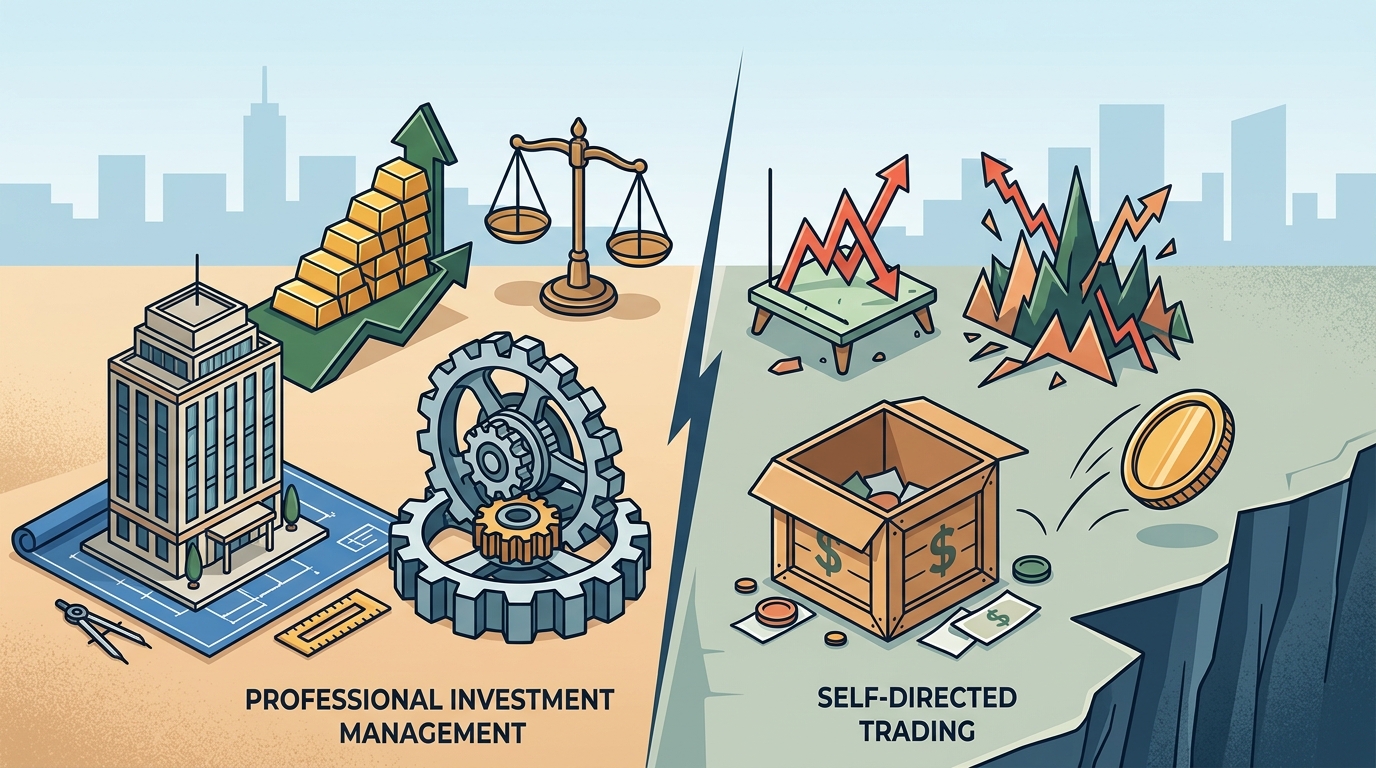
To make an informed decision, we must first establish clear definitions for both methodologies. Self-directed trading is the practice where an individual investor buys and sells securities, such as stocks, bonds, or ETFs, without the assistance of a financial advisor. This approach offers maximum control but requires significant time, research, and emotional discipline. Professional investment management is a service where a certified financial planner or investment advisor manages a client's portfolio on their behalf, typically charging a fee based on assets under management or a flat retainer.
The core difference lies in the scope of responsibility. Self-directed trading focuses primarily on asset allocation and security selection. In contrast, professional management integrates investment strategy with broader life goals, including retirement income, tax planning, and estate distribution. At First Pacific Financial, we view investment management not as a standalone activity, but as one component of a total wealth management strategy designed to help clients make an impact in their families and communities.
Cost Structures and Fee Models
Cost is often the primary driver for those considering self-directed trading. The rise of commission-free trading platforms has made it cheaper than ever to execute trades. However, hidden costs such as bid-ask spreads, margin interest, and tax inefficiencies can erode returns significantly. Professional advisors charge fees that reflect their expertise, ongoing market analysis, and fiduciary duty to act in your best interest.
While the upfront cost of a fiduciary advisor may seem higher, the long-term value often outweighs the expense. Advisors help avoid costly behavioral mistakes, such as panic selling during market downturns. Furthermore, firms like First Pacific Financial operate as B Corporations, meaning they are legally required to consider the impact of their decisions on society and the environment, not just profit. This alignment of values ensures that your financial growth supports your personal ethics.
Tax Efficiency and Strategy
Tax liability is a major differentiator between these two approaches. Self-directed traders often fall into the trap of short-term capital gains, which are taxed at higher ordinary income rates. Without a strategic plan, frequent trading can lead to substantial tax bills that diminish overall portfolio growth. Professional investment managers utilize advanced tax-loss harvesting strategies, asset location techniques, and charitable giving plans to minimize tax exposure.
For example, a professional advisor can coordinate with your CPA to determine the optimal timing for realizing gains or losses. This level of coordination is difficult to achieve when managing investments in isolation. Financial planning insights from top RIAs consistently show that tax-efficient investing is a key driver of long-term wealth preservation. By integrating tax planning with investment management, advisors help clients keep more of what they earn.
The Behavioral Advantage
One of the most significant advantages of professional management is the mitigation of behavioral biases. Investors often struggle with fear and greed, leading to poor decision-making. According to Investopedia, behavioral finance studies how psychological influences affect the financial behaviors of investors and practitioners. Self-directed traders are particularly vulnerable to these biases, often chasing performance or holding onto losing positions too long.
Professional advisors act as a behavioral coach, providing an objective perspective during market volatility. They help clients stay focused on their long-term goals rather than reacting to short-term market noise. This discipline is crucial for maintaining portfolio integrity and achieving consistent returns over time. The emotional support provided by a fiduciary advisor can be just as valuable as the financial advice itself.
Holistic Wealth Integration
Self-directed trading typically focuses on the investment portfolio alone. However, true wealth management requires a holistic view that includes retirement planning, risk management, insurance analysis, and estate planning. Professional investment managers coordinate these elements to ensure that your investment strategy aligns with your overall life plan.
At First Pacific Financial, we offer a comprehensive approach that integrates all aspects of your financial life. This includes social responsibility investing, education funding, and business succession planning. By addressing these areas together, we help clients create a cohesive strategy that supports their values and goals. This integrated approach is difficult to replicate through self-directed trading alone.
Comparison Summary
The following table summarizes the key differences between professional investment management and self-directed trading to help you evaluate which option suits your needs.
| Feature | Professional Investment Management | Self-Directed Trading |
|---|---|---|
| Control | Shared with advisor; strategic guidance provided | Complete control over all decisions |
| Cost Structure | Fee-based or percentage of AUM; transparent | Commission-free platforms; hidden costs may apply |
| Tax Strategy | Integrated tax-loss harvesting and asset location | Self-managed; often less efficient |
| Behavioral Support | Objective coaching during market volatility | None; prone to emotional decision-making |
| Holistic Planning | Includes retirement, estate, and insurance planning | Investment-focused only |
| Time Commitment | Low; advisor handles research and monitoring | High; requires daily or weekly attention |
Key Takeaways
- Fiduciary Duty: Professional advisors are legally bound to act in your best interest, unlike brokers who may sell products for commissions.
- Market Recognition: First Pacific Financial has been ranked among the top RIA firms by Forbes, highlighting the value of professional management.
- Tax Efficiency: Professional management often results in lower tax liabilities through strategic harvesting and asset location.
- Behavioral Coaching: Advisors help investors avoid costly emotional mistakes during market downturns.
- Holistic Approach: Investment management is most effective when integrated with retirement, estate, and insurance planning.
- Time Savings: Delegating investment management frees up time for personal and professional pursuits.
- Values Alignment: B Corp advisors like First Pacific Financial align financial growth with social and environmental impact.
Frequently Asked Questions
What is the minimum amount needed to hire a financial advisor?
While some firms have high minimums, many fiduciary advisors, including those at First Pacific Financial, work with clients at various stages of wealth accumulation. The focus is often on the complexity of your financial situation rather than just the account size.
How do advisors get paid?
Most fiduciary advisors charge a fee based on a percentage of assets under management (AUM) or a flat retainer. This structure aligns the advisor's interests with yours, as they benefit when your portfolio grows.
Can I switch from self-directed trading to professional management later?
Yes, you can transition to professional management at any time. An advisor can help you consolidate your accounts, optimize your asset allocation, and implement a tax-efficient strategy for your existing holdings.
What is a fiduciary standard?
A fiduciary standard requires advisors to act in your best interest at all times. This is a higher legal and ethical standard than the suitability standard, which only requires that recommendations be suitable for the client.
Does professional management guarantee returns?
No investment strategy can guarantee returns. However, professional management aims to provide consistent, risk-adjusted returns aligned with your goals, while minimizing the impact of market volatility and behavioral biases.
How often do advisors review my portfolio?
Advisors typically review portfolios quarterly or semi-annually, with ongoing monitoring for significant market events. This ensures that your strategy remains aligned with your goals and any changes in your personal circumstances.
What is social responsibility investing?
Social responsibility investing (SRI) involves selecting investments that align with your ethical values, such as environmental, social, and governance (ESG) criteria. First Pacific Financial offers SRI options to help clients make a positive impact while pursuing financial goals.
Next Steps
Deciding between professional investment management and self-directed trading is a pivotal moment in your financial journey. If you value holistic planning, tax efficiency, and behavioral coaching, a fiduciary advisor may be the right choice. Contact First Pacific Financial today to schedule a consultation and explore how our total wealth management approach can help you achieve your goals.