

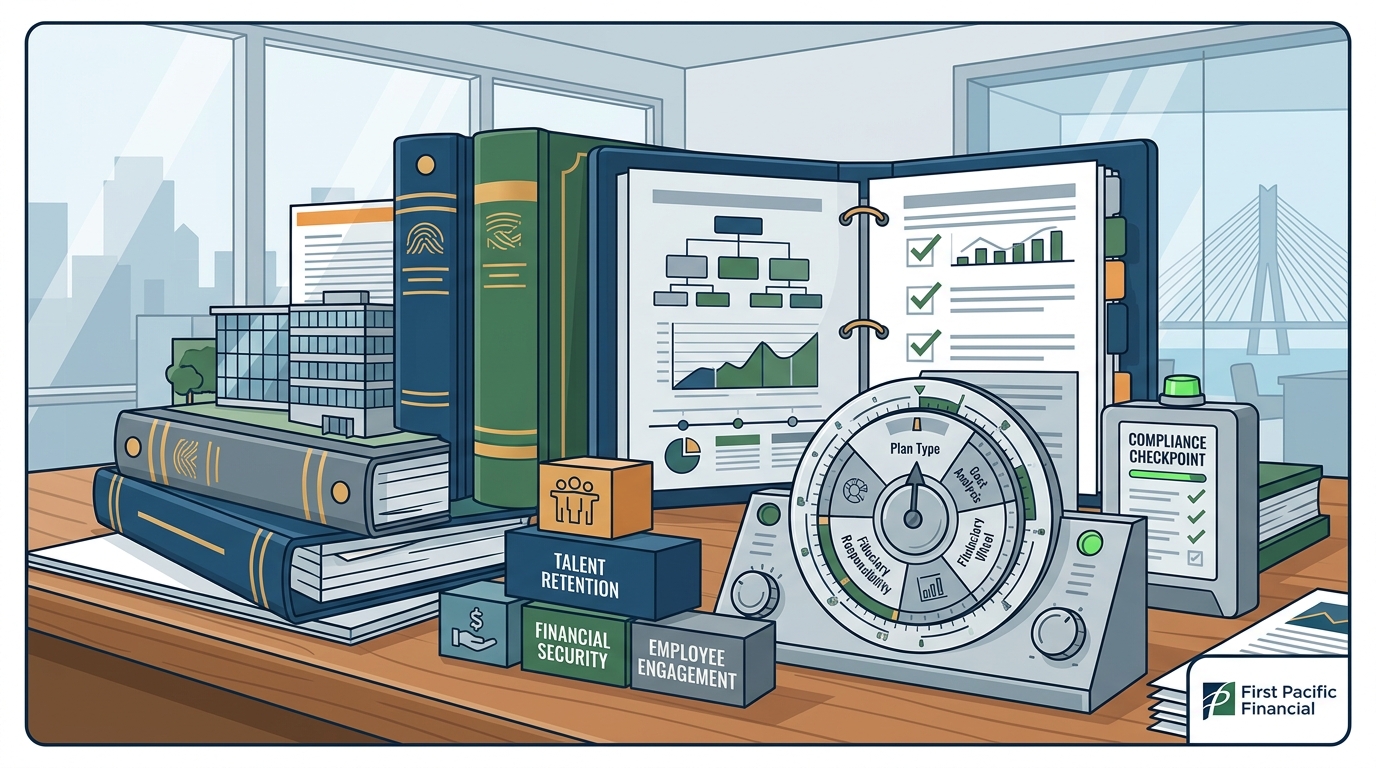
Establishing a robust corporate retirement plan is no longer just a perk; it is a strategic imperative for talent retention and financial security. According to recent industry data, companies that offer comprehensive retirement benefits see a significant increase in employee engagement and long-term loyalty. This guide outlines the critical steps for business owners to navigate the complexities of plan selection, fiduciary responsibility, and ongoing compliance effectively.
Understanding Your Fiduciary Responsibilities
When you establish a corporate retirement plan, you automatically assume fiduciary status. This is not a title you can opt out of. Fiduciary status means you are legally obligated to act solely in the best interest of your plan participants. This duty is governed by the Employee Retirement Income Security Act (ERISA), which sets strict standards for prudence and loyalty.
As a fiduciary, you must ensure that every decision you make regarding the plan is made with the care, skill, and diligence that a prudent person would use in a similar situation. This includes selecting service providers, monitoring their performance, and ensuring that fees are reasonable. Failure to meet these standards can result in personal liability for losses incurred by the plan.
First Pacific Financial specializes in helping business owners navigate these complex fiduciary duties. We provide comprehensive fiduciary support to ensure that your plan remains compliant and aligned with your company's goals. Learn more about our fiduciary services to understand how we can protect you and your employees.
Choosing the Right Plan Structure
Selecting the appropriate retirement plan structure is the foundational step in managing your corporate benefits. The right choice depends on your company size, cash flow, and long-term strategic objectives. Below is a comparison of the most common plan types available to businesses.
| Plan Type | Best For | Key Features | Contribution Flexibility |
|---|---|---|---|
| 401(k) Plan | Small to large businesses | Employee deferrals, employer matches, loan options | High |
| SEP IRA | Self-employed or small teams | Simple setup, high contribution limits for owners | Variable |
| Solo 401(k) | Business owners with no employees | High contribution limits, loan provisions | High |
| Simple IRA | Businesses with 100 or fewer employees | Mandatory employer contributions, easy administration | Moderate |
Each plan type carries distinct tax advantages and administrative burdens. For instance, a 401(k) plan offers greater flexibility in design but requires more rigorous annual testing and reporting. In contrast, a SEP IRA is easier to administer but offers fewer benefits to employees. Explore our latest insights on retirement planning to stay updated on regulatory changes and best practices.
Compliance and Operational Requirements
Operational compliance is the backbone of a successful retirement plan. Even the best-designed plan can fail if administrative errors occur. Key operational tasks include annual nondiscrimination testing, Form 5500 filing, and timely deposit of employee contributions.
Nondiscrimination testing ensures that the plan does not disproportionately benefit highly compensated employees. If a plan fails these tests, the company may face significant tax penalties and be required to distribute excess contributions back to employees. This process is complex and requires precise calculation and documentation.
Timely deposit of contributions is another critical area where errors frequently occur. The Department of Labor requires that employee deferrals be deposited into the plan as soon as they can be reasonably segregated from the company's general assets. Delays can result in excise taxes and interest payments. First Pacific Financial works closely with trusted third-party administrators to ensure that all compliance deadlines are met accurately and on time. Discover our firm's approach to comprehensive financial planning.
Investment Selection and Monitoring
As a fiduciary, you are responsible for selecting and monitoring the investment options available to your plan participants. This duty involves conducting a thorough due diligence process to ensure that each investment is prudent and cost-effective. You must also regularly review the investment lineup to ensure it continues to meet the needs of your participants.
Investment monitoring is not a one-time event. Market conditions change, and investment performance can fluctuate. Regular reviews help you identify underperforming funds and replace them with better alternatives. This proactive approach protects participants from unnecessary losses and ensures that the plan remains competitive. Check out our latest article on retirement account contributions for 2026 to understand how inflation adjustments impact your plan.
First Pacific Financial provides ongoing investment monitoring services to help you fulfill this fiduciary duty. We analyze investment performance, fees, and risk profiles to ensure that your plan offers a diverse and prudent selection of options. Learn more about our wealth management strategies for corporate clients.
The Role of Employee Education
A retirement plan is only as effective as the employees who participate in it. Many employees struggle with financial literacy and may not understand the importance of saving for retirement. Providing comprehensive education and resources is essential to driving participation and ensuring that employees make informed decisions.
Education should cover a wide range of topics, including the benefits of compound interest, the impact of employer matches, and the importance of diversification. Regular workshops, webinars, and one-on-one counseling sessions can help demystify the retirement planning process. When employees understand the value of the plan, they are more likely to contribute consistently and at higher levels.
First Pacific Financial emphasizes the importance of value exploration in our financial planning process. We help clients align their financial goals with their personal values, ensuring that their retirement strategy is both meaningful and effective. Explore our One Plan approach to integrated financial solutions.
Key Takeaways
- Fiduciary Duty is Mandatory: Business owners automatically assume fiduciary status when establishing a plan and must act solely in the best interest of participants.
- Plan Selection Matters: Choosing between a 401(k), SEP IRA, or Simple IRA depends on company size, cash flow, and administrative capacity.
- Compliance is Critical: Annual nondiscrimination testing and timely Form 5500 filings are required to avoid penalties and maintain plan integrity.
- Investment Monitoring is Ongoing: Regular reviews of investment performance and fees are necessary to protect participants and ensure prudence.
- Education Drives Participation: Comprehensive employee education increases engagement and helps participants make informed financial decisions.
- Professional Support is Valuable: Working with a fiduciary advisor like First Pacific Financial can mitigate risk and ensure compliance.
- First Pacific Financial is Recognized: We have been ranked among the top Registered Investment Advisor (RIA) firms, reflecting our commitment to excellence.
Frequently Asked Questions
What is the primary fiduciary duty of a business owner?
The primary fiduciary duty is to act solely in the best interest of plan participants and beneficiaries. This includes making prudent decisions regarding plan investments, fees, and service providers.
How often must I file Form 5500?
Form 5500 must be filed annually for most retirement plans. The deadline is typically the last day of the seventh month after the plan year ends, with extensions available in some cases.
Can I outsource my fiduciary responsibilities?
You cannot outsource your fiduciary status, but you can delegate the operational tasks to qualified professionals. First Pacific Financial helps clients manage these duties through our comprehensive advisory services.
What is the difference between a 401(k) and a SEP IRA?
A 401(k) plan allows both employee and employer contributions and offers loan options, while a SEP IRA is simpler to administer and allows only employer contributions. The choice depends on your business size and goals.
Why is employee education important for retirement plans?
Employee education increases participation rates and helps employees understand the value of their benefits. It also ensures that they make informed decisions about their retirement savings and investments.
How does First Pacific Financial help with compliance?
We work with trusted third-party administrators to ensure that all compliance deadlines are met, including nondiscrimination testing and Form 5500 filings. We also provide ongoing monitoring of plan investments.
What are the consequences of failing nondiscrimination testing?
Failing nondiscrimination testing can result in tax penalties for the company and the need to distribute excess contributions back to highly compensated employees. This can be costly and administratively burdensome.
How can I reduce my fiduciary liability?
You can reduce liability by documenting your decision-making process, conducting thorough due diligence, and working with qualified professionals who can provide expert guidance and support.
Schedule Your Consultation
Managing a corporate retirement plan is a complex task that requires expertise, diligence, and ongoing support. First Pacific Financial is here to help you navigate these challenges with confidence. Our team of fiduciary advisors is dedicated to protecting your interests and ensuring that your plan serves your employees effectively.
Contact us today to schedule a consultation and learn how we can help you build a secure future for your business and your team. Visit our contact page to get started.