

Professional Investment Management vs Self-Directed Trading: Which Path Fits Your Wealth Goals?
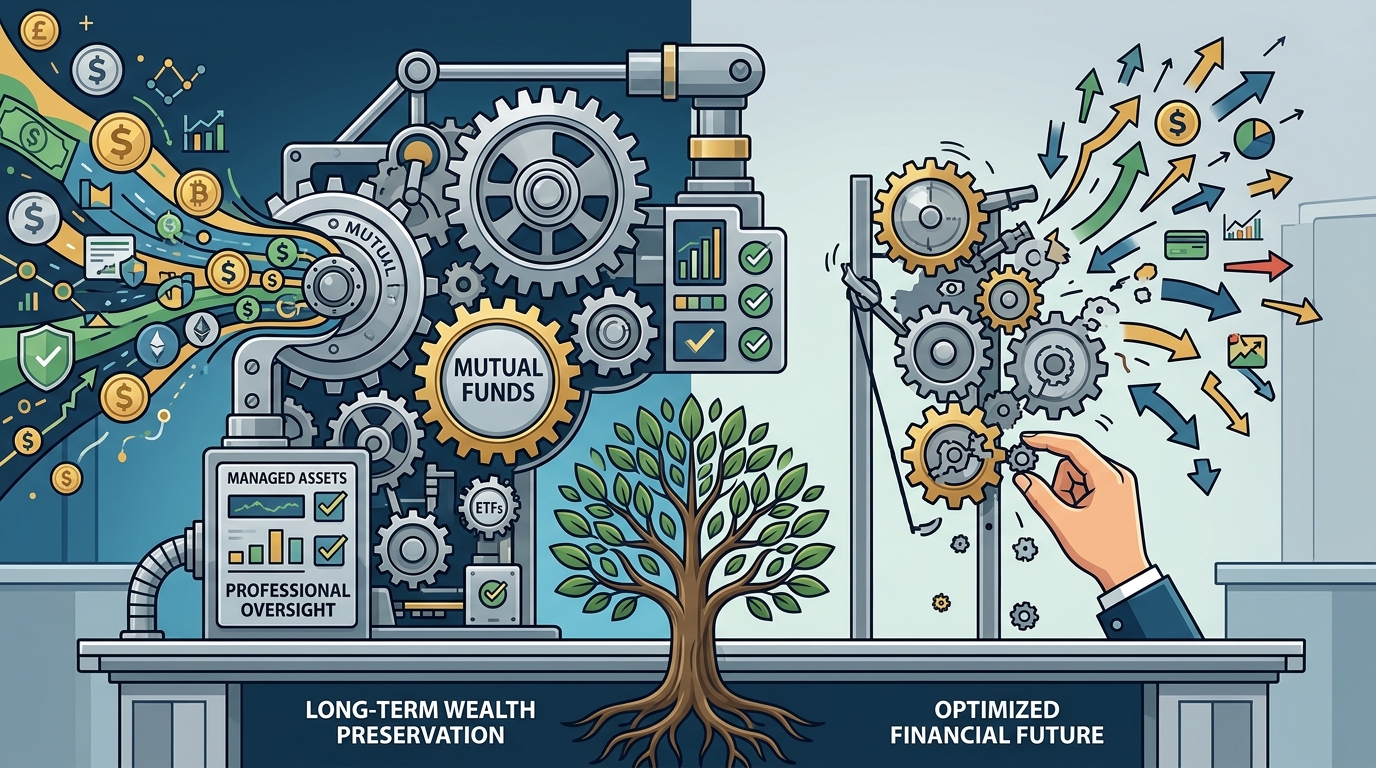
The landscape of personal finance has shifted dramatically in the last decade. According to a 2024 report by the Investment Company Institute, individual investors now hold over $30 trillion in mutual funds and ETFs, signaling a massive migration toward managed assets. This data shows that while self-directed trading has become more accessible than ever, the majority of long-term wealth preservation still relies on professional oversight. Understanding the mechanical and psychological differences between these two approaches is critical for anyone looking to optimize their financial future.
Core Differences in Strategy and Control
The fundamental distinction lies in the locus of decision-making. Self-directed trading requires the individual to research, select, and execute every transaction. This approach offers total autonomy but demands significant time and expertise. In contrast, professional investment management delegates these decisions to certified experts who utilize institutional-grade research tools and diversified portfolios.
Professional investment management is a service where a financial advisor or firm manages assets on behalf of a client according to a predefined investment policy statement. This structure ensures that emotional biases do not derail long-term financial plans. Self-directed trading is the practice of an individual buying and selling financial instruments without the assistance of a professional advisor.
When you choose to manage your own portfolio, you are responsible for asset allocation, rebalancing, and market timing. These tasks require a deep understanding of macroeconomic indicators and technical analysis. Conversely, a professional firm like FP Financial handles these complexities, allowing clients to focus on their careers and personal lives. The trade-off is a loss of granular control over individual stock picks in exchange for strategic coherence.
Cost Structures and Fee Implications
Costs can erode compound growth significantly over time. Self-directed trading often appears cheaper initially because many retail brokers offer commission-free trades. However, hidden costs such as bid-ask spreads, margin interest, and tax inefficiencies can accumulate rapidly. Professional management typically charges an asset-under-management (AUM) fee, which aligns the advisor's incentives with your portfolio's growth.
According to data from the Journal of Finance, high fees in actively managed funds can reduce net returns by 1 to 2 percent annually. While this sounds small, the compounding effect over thirty years is substantial. Professional managers mitigate this by utilizing tax-loss harvesting and strategic asset location. For more insights on fee structures, you can review the SEC's definition of AUM fees.
It is important to note that professional management is not a one-size-fits-all solution. FP Financial employs a transparent fee model designed to eliminate conflicts of interest. This ensures that recommendations are made solely based on your financial goals rather than commission structures. Understanding these cost dynamics is essential for accurate net-return projections.
The Psychological Advantage of Professionals
Behavioral finance research consistently proves that investors often underperform due to emotional decision-making. Fear and greed drive market timing errors, such as selling during downturns and buying during bubbles. Professional managers act as behavioral coaches, enforcing discipline during volatile periods.
A study by Dalbar Inc. highlighted that the average investor significantly underperforms the S&P 500 index due to poor timing decisions. This gap is known as the behavior gap. Professional investment management bridges this gap by removing emotion from the equation. When markets crash, advisors provide context and prevent panic selling. This stability is crucial for maintaining long-term wealth accumulation.
Self-directed traders must possess exceptional emotional resilience. Without a professional to provide objective analysis, it is easy to become overwhelmed by market noise. Resources like the National Bureau of Economic Research papers on investor behavior offer deep dives into these psychological pitfalls. Recognizing these biases is the first step toward better financial outcomes.
Tax Efficiency and Regulatory Compliance
Tax implications are a major differentiator between these two approaches. Professional managers utilize sophisticated strategies to minimize tax liabilities. These include tax-loss harvesting, where losing positions are sold to offset gains, and strategic asset location to place tax-inefficient assets in tax-advantaged accounts.
Self-directed traders often overlook the tax consequences of frequent trading. Short-term capital gains are taxed at higher ordinary income rates. Without professional guidance, investors may inadvertently trigger large tax bills. Professional firms stay updated on changing tax laws and regulatory requirements. For example, the IRS guidelines on international taxation are complex and require expert interpretation.
Compliance is another critical factor. Professional advisors are fiduciaries, legally bound to act in their clients' best interests. This standard ensures that advice is unbiased and transparent. Self-directed traders operate without this protective layer, bearing full responsibility for regulatory compliance. Understanding these legal distinctions is vital for risk management.
Determining Your Ideal Investment Path
Choosing between professional management and self-directed trading depends on your financial situation, knowledge level, and time availability. The following table summarizes the key factors to consider.
| Factor | Professional Investment Management | Self-Directed Trading |
|---|---|---|
| Time Commitment | Low. Advisor handles research and execution. | High. Requires daily monitoring and analysis. |
| Cost Structure | AUM fees or flat retainer. Transparent. | Commissions, spreads, and hidden fees. |
| Tax Strategy | Advanced tax-loss harvesting and planning. | Limited unless investor is tax expert. |
| Emotional Support | High. Behavioral coaching during volatility. | None. Investor must self-regulate. |
| Best For | Busy professionals, complex estates, high net worth. | Experienced traders, low balances, hobbyists. |
If you value your time and seek peace of mind, professional management is likely the superior choice. Contact FP Financial to discuss how a tailored strategy can align with your goals. For those with deep market expertise and ample time, self-directed trading may offer greater satisfaction and potential control.
Key Takeaways
- Professional management reduces behavioral errors that cause underperformance.
- Self-directed trading requires significant time and specialized knowledge.
- Tax efficiency is a major advantage of professional advisory services.
- Fiduciary standards ensure advisors act in your best interest.
- Costs in self-directed trading are often hidden in spreads and taxes.
- Professional managers provide emotional stability during market volatility.
- Choosing the right path depends on your financial complexity and goals.
Frequently Asked Questions
Is professional investment management only for the wealthy?
No. While historically associated with high net worth individuals, many firms now offer services for a broader range of investors. FP Financial provides scalable solutions that adapt to various asset levels.
Can I switch from self-directed trading to professional management later?
Yes. Many investors start self-directed and transition to professional management as their wealth grows and complexity increases. This transition can help optimize tax and estate planning.
How do professional managers handle market crashes?
Professional managers use diversification and risk management strategies to mitigate losses. They also provide behavioral coaching to prevent panic selling during volatile periods.
What is the difference between a broker and a financial advisor?
A broker executes trades, while a financial advisor provides holistic planning and fiduciary advice. Advisors are legally bound to act in your best interest, unlike brokers who may operate under suitability standards.
Are self-directed traders completely on their own?
While they make their own decisions, many use educational resources and analytical tools. However, they lack the personalized guidance and accountability provided by a professional advisor.
How are professional management fees calculated?
Fees are typically based on a percentage of assets under management (AUM). This aligns the advisor's success with your portfolio's growth. For details, see the AUM guide.
What are the risks of self-directed trading?
Risks include emotional decision-making, lack of diversification, and tax inefficiencies. Without professional oversight, investors may make costly errors during market stress.
Take Control of Your Financial Future
The choice between professional investment management and self-directed trading is not just about returns. It is about lifestyle, peace of mind, and long-term security. If you are ready to delegate the complexities of wealth management to experts, schedule a consultation with FP Financial today. Let us help you build a resilient financial strategy tailored to your unique goals.