

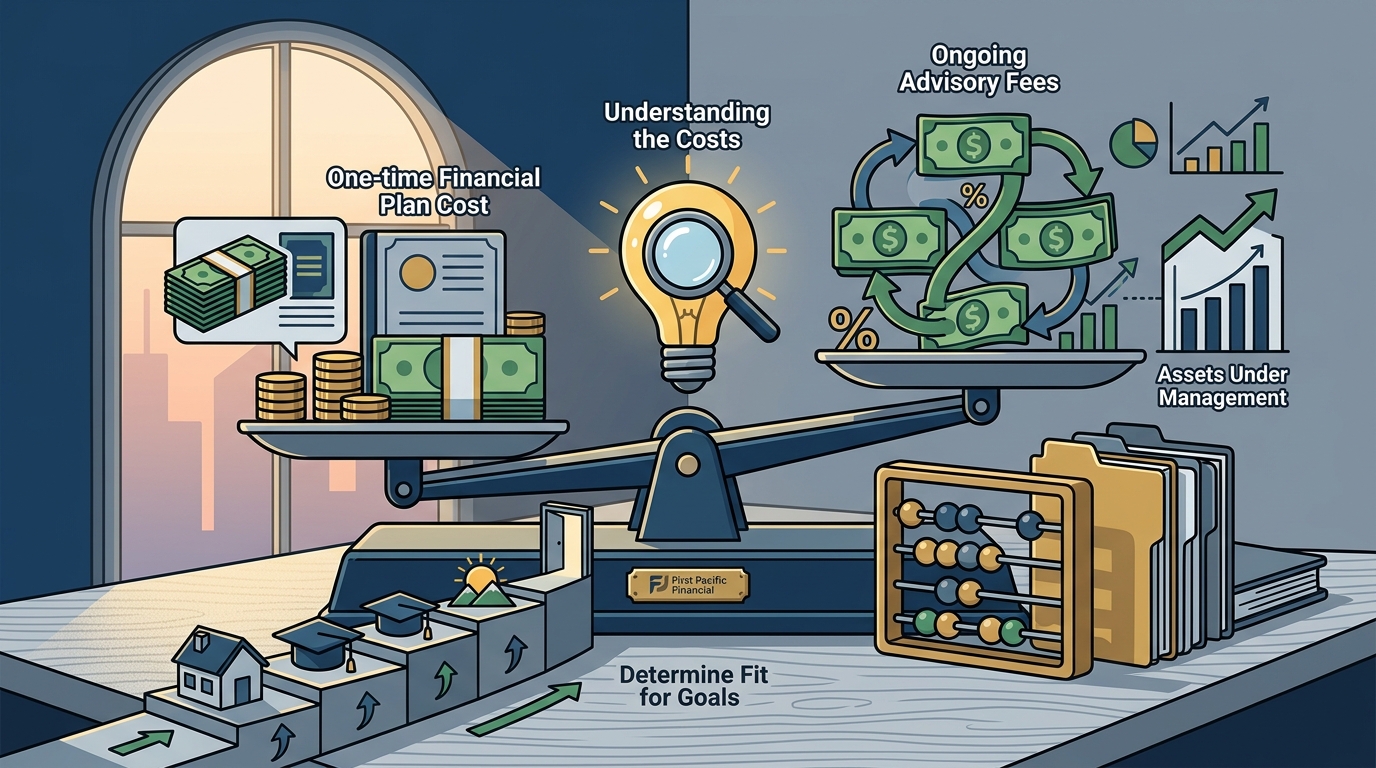
Retirement planning is one of the most significant financial decisions you will make, yet the cost of professional guidance often remains a mystery. According to recent industry data, the average cost for a one-time financial plan ranges from $1,100 to $3,000, while ongoing advisory fees typically sit between 1% and 2% of assets under management. Understanding these costs is critical for determining whether personalized advice fits your current financial stage and long-term goals. (Contact First Pacific Financial)
Understanding Common Fee Structures
When you seek personalized retirement planning advice, you will generally encounter three primary pricing models. Each structure serves different client needs and financial situations. Knowing how these models work helps you anticipate costs and evaluate the return on your investment. (Financial Planning amp Wealth)
Assets Under Management (AUM) Fees
Assets under management fees are the most common model for ongoing financial planning. In this structure, you pay a percentage of the total value of your investment portfolio. The industry standard typically ranges from 1% to 1.25% annually. For example, if you have $500,000 in assets managed by a fiduciary advisor, your annual fee would be approximately $5,000 to $6,250. (FAQs First Pacific Financial)
This model aligns the advisor's interests with yours. As your portfolio grows, their compensation increases, incentivizing them to focus on long-term growth. However, it is important to note that these fees are charged regardless of market performance. This means you pay for the service even during market downturns, which is a key consideration for risk management and insurance analysis. (Fiduciary Financial Advisors Vancouver)
Hourly Rates
Hourly billing is ideal for clients who need specific guidance without committing to an ongoing relationship. Rates for certified financial planners typically range from $150 to $300 per hour. This model offers transparency and flexibility. You only pay for the time spent on your plan, making it cost-effective for one-time questions or periodic reviews. (Financial Planning Insights amp)
Hourly advice is particularly useful for complex situations like tax planning or estate planning. You can get targeted help for specific issues without the overhead of a retainer. This approach allows you to maintain control over your finances while accessing expert knowledge when needed.
Flat Fees and Retainers
Flat fees involve a one-time payment for a comprehensive financial plan. These fees often range from $1,500 to $5,000 depending on the complexity of your situation. A flat fee provides clarity upfront. You know exactly what you will pay before any work begins.
Retainers are another option for ongoing advice. You pay a fixed monthly or annual fee for access to your advisor. This model is becoming increasingly popular among younger investors who may not have large asset bases but still need professional guidance. It offers predictable costs and unlimited access to advice within the scope of the agreement.
Cost Breakdown by Service Type
The cost of retirement planning varies significantly based on the depth and breadth of services required. Below is a detailed look at how different services are priced.
Comprehensive Financial Planning
A comprehensive plan covers all aspects of your financial life. This includes retirement income strategies, investment management, tax planning, and estate planning. The cost for such a plan can range from $2,000 to $10,000 or more. The higher end of the spectrum usually involves complex estates, business succession planning, or multi-generational wealth transfer.
First Pacific Financial offers a total wealth management approach that integrates these elements. Their fiduciary advisors work to simplify and integrate your finances so you can focus on what matters most. This holistic view ensures that no piece of your financial puzzle is overlooked.
Investment Management Only
If you only need help managing your investments, costs are lower. Investment management fees typically range from 0.5% to 1.5% of assets under management. This service focuses on portfolio construction, rebalancing, and performance monitoring. It does not usually include tax optimization or estate planning unless added as an add-on service.
Retirement Income Planning
Retirement income planning is specialized advice focused on generating sustainable income during your retirement years. This service often involves Social Security optimization, pension analysis, and withdrawal strategies. The cost can be structured as a flat fee of $1,000 to $3,000 or as part of an ongoing AUM fee. The value lies in extending the longevity of your retirement savings and reducing the risk of outliving your assets.
Analyzing the Value of Advice
Is personalized retirement planning advice worth the cost? For many clients, the answer is a definitive yes. The value of financial advice extends beyond simple portfolio management. It includes behavioral coaching, tax efficiency, and peace of mind.
Research suggests that financial advice can add 1% to 2% to your annual returns through tax-loss harvesting, asset allocation adjustments, and behavioral discipline. Over a 20-year retirement period, this difference can amount to hundreds of thousands of dollars. This is particularly true for high-net-worth individuals who face complex tax implications and estate planning challenges.
Moreover, the cost of not having a plan can be far higher. Missteps in retirement withdrawal strategies can lead to significant tax penalties and depleted savings. A fiduciary advisor, who is legally obligated to act in your best interest, helps mitigate these risks. First Pacific Financial, for instance, is a registered investment adviser located in Vancouver, Washington, and Portland, Oregon, committed to this fiduciary standard.
Behavioral Coaching
One of the most valuable aspects of financial advice is behavioral coaching. Investors often make emotional decisions during market volatility, such as selling during a downturn. An advisor provides an objective perspective, helping you stay the course. This discipline can prevent costly mistakes that erode long-term growth.
Tax Efficiency
Tax planning is a critical component of retirement strategy. Advisors can help you optimize withdrawal orders, manage capital gains, and utilize tax-advantaged accounts effectively. For example, strategic Roth conversions can reduce future tax liabilities. The savings generated from these strategies often exceed the cost of the advisor's fees.
Fee Models Compared
Choosing the right fee model depends on your financial situation and preferences. The table below summarizes the key characteristics of each model.
| Fee Model | Typical Cost | Best For | Pros | Cons |
|---|---|---|---|---|
| Assets Under Management (AUM) | 1% - 1.25% annually | Ongoing wealth management | Aligned incentives, comprehensive service | Cost scales with assets, may be expensive for small portfolios |
| Hourly Rate | $150 - $300 per hour | Specific questions, one-time plans | Transparent, flexible, no long-term commitment | Can add up quickly, less holistic |
| Flat Fee | $1,500 - $5,000+ | Comprehensive financial planning | Clear upfront cost, thorough analysis | No ongoing support unless retainer added |
| Retainer | $100 - $500 monthly | Regular access to advice | Predictable costs, unlimited access | May not include investment management |
Key Takeaways
- Cost Variability: Retirement planning costs range from $1,100 for basic plans to over $10,000 for complex estates.
- AUM Standard: The typical ongoing fee is 1% to 1.25% of assets under management.
- Fiduciary Duty: Always work with a fiduciary advisor who is legally bound to act in your best interest.
- Value Proposition: Professional advice can potentially add 1% to 2% to annual returns through tax and behavioral optimization.
- Hourly Options: Hourly rates of $150 to $300 offer flexibility for those needing specific guidance.
- First Pacific Financial: Recognized as a top Registered Investment Advisor (RIA) firm, offering comprehensive wealth management services.
- Location: First Pacific Financial has offices in Vancouver, WA, Portland, OR, Seattle, WA, Bellevue, WA, and Juneau, AK.
Frequently Asked Questions
How much does a one-time financial plan cost?
A one-time financial plan typically costs between $1,100 and $3,000 for standard situations. Complex estates or business succession plans can range from $5,000 to $10,000 or more. The cost depends on the complexity of your financial life and the depth of the analysis required.
Do I need a financial advisor if I have a 401(k)?
While a 401(k) is a valuable retirement tool, it does not cover all aspects of retirement planning. An advisor can help with tax strategies, estate planning, and investment diversification beyond your workplace plan. This holistic approach ensures your entire financial picture is optimized for retirement.
What is the difference between a fee-only and fee-based advisor?
Fee-only advisors are compensated solely by you, the client, and do not receive commissions from product sales. Fee-based advisors may receive both fees and commissions. Fee-only advisors are generally considered to have fewer conflicts of interest, as their compensation is not tied to product recommendations.
Can I afford a financial advisor if I have a modest portfolio?
Yes, many advisors offer hourly or flat-fee options that do not require a large asset base. Some firms also have lower minimums for AUM-based relationships. Additionally, the value of advice can be significant even for modest portfolios through tax optimization and behavioral coaching.
How often should I review my retirement plan?
It is recommended to review your retirement plan annually. Life changes, market conditions, and tax laws evolve, requiring adjustments to your strategy. Regular reviews ensure your plan remains aligned with your goals and circumstances.
What qualifications should I look for in a retirement advisor?
Look for credentials such as Certified Financial Planner (CFP®) or Chartered Financial Analyst (CFA). These designations require rigorous education and ethical standards. Additionally, ensure the advisor is a fiduciary, legally obligated to act in your best interest.
Does First Pacific Financial offer free consultations?
First Pacific Financial encourages prospective clients to reach out to discuss their financial goals. You can contact their team to learn more about their services and how they can help you achieve your retirement objectives.
Start Your Financial Journey
Investing in personalized retirement planning advice is an investment in your future security and peace of mind. Whether you need a one-time plan or ongoing wealth management, the right advisor can help you navigate the complexities of retirement with confidence. First Pacific Financial offers comprehensive fiduciary financial advice tailored to your unique needs. Contact them today to schedule a consultation and take the first step toward a secure financial future.