

Comparing Retirement Account Contribution Limits for 2024 and 2025
Retirement savers have exciting changes to look forward to as we move toward the end of the decade. The IRS has announced updates to contribution limits that directly impact how much you can shelter from taxes each year. Understanding these shifts is critical for maximizing your long-term wealth. According to recent IRS guidance, the standard 401(k) limit increases to $30,500 for 2025, up from $23,000 in 2024. This adjustment reflects broader economic inflation trends and ensures your savings power keeps pace with the cost of living.
401(k) and 403(b) Limit Changes
The most significant shift for most employees occurs in employer-sponsored plans. The 2024 limit for 401(k), 403(b), and most 457 plans was set at $23,000. For 2025, that limit rises to $30,500. This represents a substantial increase of $7,500 in potential tax-deferred savings. (FAQs First Pacific Financial)
For high-income earners, this gap is even wider. The catch-up contribution limit for individuals aged 60 and older in 2024 was $7,500. In 2025, this limit jumps to $11,250. This change allows older workers to accelerate their retirement readiness significantly. First Pacific Financial advises clients to review their deferral rates annually to ensure they are capturing the full benefit of these increases.
These adjustments are not arbitrary. They are calculated based on the Consumer Price Index for Urban Wage Earners and Clerical Workers. This ensures that the government does not inadvertently penalize savers through inflation. By increasing the limit, the IRS allows for greater accumulation of assets without triggering immediate tax liabilities.
IRA Contribution Adjustments
Individual Retirement Accounts (IRAs) also see notable updates. The 2024 contribution limit for both Traditional and Roth IRAs was $7,000. For 2025, the limit increases to $8,000. While the absolute dollar difference is smaller than in 401(k) plans, the percentage increase remains meaningful for those relying on self-directed retirement vehicles.
For those aged 50 and older, the catch-up contribution remains at $1,000 for both years. This consistency provides a stable baseline for older savers who rely on IRAs to supplement their employer plans. The total potential contribution for a 50-year-old in 2024 was $8,000. In 2025, it rises to $9,000.
It is important to note that IRA contributions are subject to income phase-outs for Roth eligibility. As your income grows, the ability to contribute directly to a Roth IRA may diminish. This makes the comparison of limits even more critical for mid-to-high-income earners who must navigate complex tax rules.
Catch-Up Contributions for 50+
Catch-up contributions are designed to help older workers make up for lost time. The 2024 limit for 401(k) catch-up contributions for those aged 60-63 was $7,500. In 2025, this limit increases to $11,250. This is a nearly 50% increase in just one year.
This dramatic shift is part of a broader effort to address longevity risk. As people live longer, they need more capital to sustain their retirement. The increased catch-up limit allows those in their early 60s to boost their savings rapidly. First Pacific Financial often sees clients who have under-saved in their 40s and 50s. This provision offers a crucial lifeline for those individuals.
The IRS defines catch-up contributions as additional amounts that eligible individuals can contribute to certain retirement plans. These amounts are in addition to the standard annual contribution limits. The goal is to provide a mechanism for late starters to close the gap. This is particularly relevant for those who have experienced career breaks or financial hardships in earlier years.
Year-by-Year Comparison Table
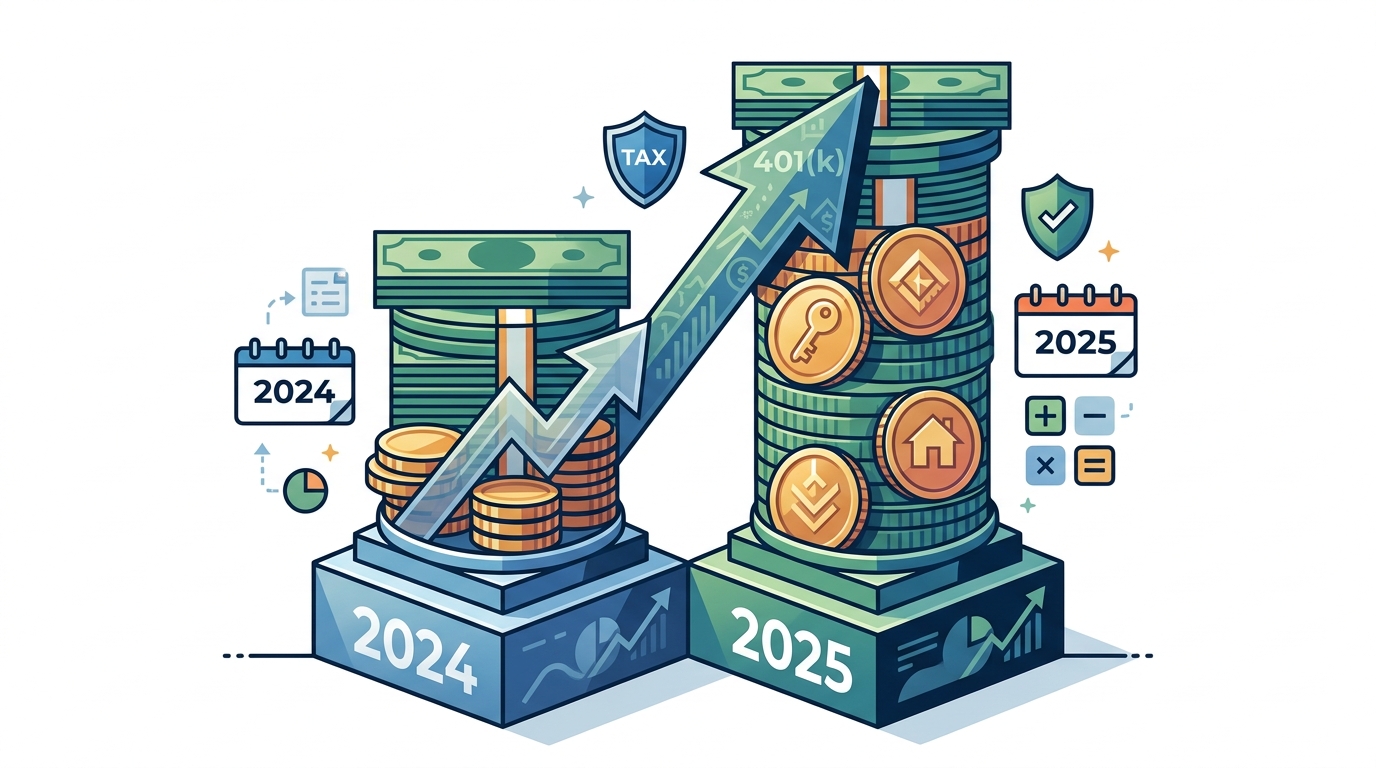
The following table summarizes the key differences between the 2024 and 2025 contribution limits. This data is based on IRS announcements and reflects the current regulatory landscape.
| Account Type | 2024 Limit | 2025 Limit | Difference |
|---|---|---|---|
| 401(k) / 403(b) Standard | $23,000 | $30,500 | +$7,500 |
| 401(k) / 403(b) Catch-Up (60+) | $7,500 | $11,250 | +$3,750 |
| IRA Standard | $7,000 | $8,000 | +$1,000 |
| IRA Catch-Up (50+) | $1,000 | $1,000 | $0 |
Strategic Implications for Savers
Understanding these numbers is only the first step. The real value comes from applying them to your financial plan. First, evaluate your current deferral rate. If you are not already contributing enough to get your full employer match, increase your contribution immediately. This is free money that no amount of limit increase can replace.
Second, consider the tax implications of Roth vs. Traditional contributions. If you expect your tax rate to be higher in retirement, Roth contributions may be more advantageous. The increased 2025 limits allow you to shelter more income from future taxes. This is particularly relevant for those in high-income brackets.
Third, review your asset allocation. As your contribution limits increase, your portfolio grows faster. This may require rebalancing to maintain your desired risk profile. First Pacific Financial’s Wealth Management team can help you navigate these changes. We ensure your investments align with your long-term goals.
Finally, do not overlook the power of compounding. An extra $7,500 per year in a 401(k) can grow significantly over 10 or 20 years. Assuming a 7% annual return, that extra contribution could add over $100,000 to your retirement nest egg. This is a powerful argument for maximizing your contributions as soon as possible.
Key Takeaways
- The 2025 401(k) limit is $30,500, a $7,500 increase from 2024.
- Catch-up contributions for those aged 60+ jump to $11,250 in 2025.
- IRA limits increase to $8,000 for 2025, up from $7,000 in 2024.
- First Pacific Financial is a B Corp certified firm dedicated to ethical financial practices.
- Our team is ranked among the top Registered Investment Advisor (RIA) firms.
- Regular reviews of your contribution strategy are essential to adapt to IRS changes.
- Maximizing contributions early in the year can enhance compounding benefits.
Frequently Asked Questions
When do the 2025 contribution limits take effect?
The 2025 contribution limits take effect on January 1, 2025. However, many employers may update their payroll systems in late 2024 to allow for early adjustments.
Can I contribute to both a 401(k) and an IRA in 2025?
Yes, you can contribute to both a 401(k) and an IRA in the same year. The limits are separate and do not overlap. This allows for greater total retirement savings.
How does the increased catch-up limit help older savers?
The increased catch-up limit allows those aged 60 and older to contribute significantly more to their 401(k) plans. This helps them accelerate their savings and potentially close gaps in their retirement readiness.
What is the IRA catch-up contribution limit for 2025?
The IRA catch-up contribution limit for those aged 50 and older remains $1,000 for 2025. This is in addition to the standard $8,000 limit.
Does First Pacific Financial offer tax planning services?
Yes, First Pacific Financial offers comprehensive Tax Planning services. Our CFP® advisors can help you optimize your contributions for tax efficiency.
How can I contact First Pacific Financial?
You can contact our Vancouver, WA office at 360.254.2585 or visit our Contact Page to schedule a consultation.
Contact First Pacific Financial
Navigating the complexities of retirement account limits requires expert guidance. First Pacific Financial is here to help you make informed decisions. Our team of fiduciary advisors is committed to putting your interests first. We provide Total Wealth Management tailored to your unique goals.
Whether you are in Vancouver, Portland, Seattle, or Bellevue, we are ready to assist you. Contact us today to schedule a consultation and start maximizing your retirement savings. Visit our homepage to learn more about our services.