

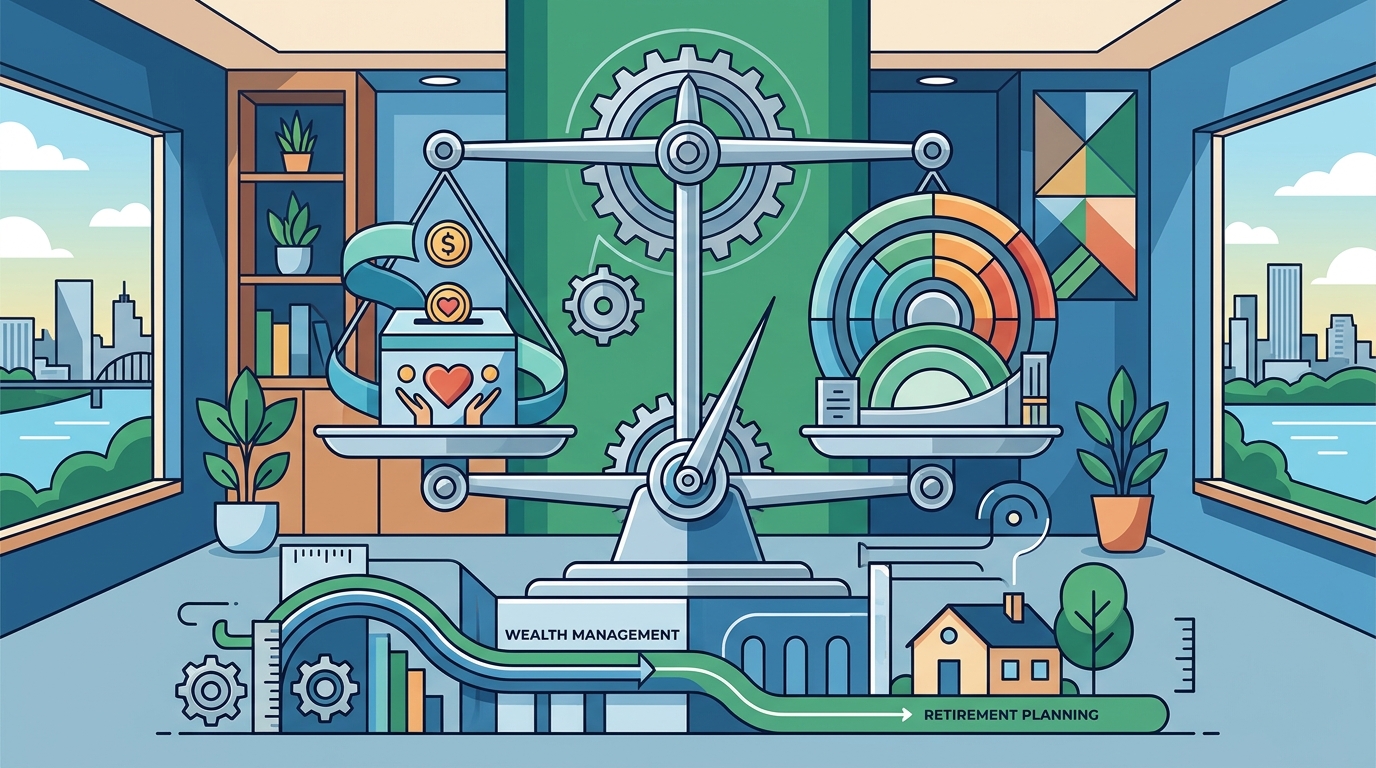
Matching charitable giving with financial risk tolerance means adjusting your donation strategy to reflect your comfort with market volatility and long-term wealth preservation. First Pacific Financial, a fee-only fiduciary advisory firm in Vancouver, WA, helps clients integrate philanthropy into their broader investment plans. This approach ensures that your generosity does not compromise your retirement security or overall financial stability. For additional details, review the fp financial com.
Understanding the Risk-Giving Connection
Financial risk tolerance is the degree of variability in investment returns that an investor can comfortably bear without changing their asset allocation. When you donate to charity, you are effectively reducing your investable assets. If your portfolio is highly aggressive, a large donation might not significantly alter your risk profile. However, if your portfolio is conservative, a substantial gift could force you to take on more risk to meet your future goals. For additional details, review the .
First Pacific Financial advises clients to view charitable giving as a component of their overall asset allocation. By treating donations as a planned expense rather than an afterthought, you can maintain a balanced portfolio. This method prevents the unintended shift in risk that often occurs when large sums are removed from an investment account. For additional details, review the Customer Experience.
Strategies for Risk-Adjusted Giving
One effective strategy is to align the timing of your gifts with your investment horizon. If you are in a high-risk growth phase, you might consider donating appreciated securities. This allows you to avoid capital gains taxes while supporting your favorite causes. Conversely, if you are in a conservative accumulation phase, cash gifts from income streams may be more appropriate. For additional details, review the Frequently Asked Questions.
Another approach is to use a donor-advised fund (DAF). A DAF is a charitable giving vehicle that allows you to make an immediate tax-deductible contribution while retaining advisory rights over how the funds are distributed. This tool provides flexibility and can help smooth out the impact of large donations on your portfolio over time. For additional details, review the About.
Impact on Retirement Planning
Retirement planning is a critical area where risk tolerance and charitable giving intersect. Many clients assume that their retirement savings are untouchable, but strategic giving can actually enhance their retirement income. By donating during high-income years, you can reduce your taxable income and potentially lower your future required minimum distributions (RMDs).
First Pacific Financial works with clients to model different giving scenarios. This analysis shows how various donation levels affect their projected retirement income. The goal is to find a balance that satisfies both your philanthropic goals and your financial security. This ensures that your generosity does not come at the expense of your future comfort.
Tax Implications and Risk Management
Tax strategy is a key component of risk management for charitable donors. The tax code is a complex system that governs how charitable contributions are treated for tax purposes. Understanding these rules is essential for maximizing the benefit of your gifts. For example, the standard deduction may limit the tax benefit of cash donations for some taxpayers.
By working with a fiduciary advisor, you can navigate these complexities with confidence. First Pacific Financial provides tax strategy services that are integrated with your wealth management plan. This holistic approach ensures that your charitable giving is both tax-efficient and aligned with your risk tolerance. It helps you avoid common pitfalls that can erode your wealth over time.
Key Takeaways
- Charitable giving should be integrated into your overall asset allocation to maintain your desired risk profile.
- Donating appreciated securities can be a tax-efficient strategy for investors in high-risk growth phases.
- Strategic giving during high-income years can reduce taxable income and lower future RMDs.
- Working with a fiduciary advisor ensures that your philanthropy is aligned with your long-term financial goals.
- Regular reviews of your giving strategy are essential to adapt to changes in your risk tolerance and financial situation.
Frequently Asked Questions
How does charitable giving affect my investment risk profile?
Charitable giving reduces your investable assets, which can alter your portfolio's risk profile. If you donate a large sum, you may need to adjust your asset allocation to maintain your target level of risk. This is why it is important to integrate giving into your overall financial plan.
What is the best way to give if I have a conservative risk tolerance?
If you have a conservative risk tolerance, cash gifts from income streams may be more appropriate than donating appreciated securities. This approach helps you maintain a stable portfolio while still supporting your favorite causes. It is important to consult with an advisor to determine the best strategy for your specific situation.
Can charitable giving improve my retirement income?
Yes, strategic giving can improve your retirement income by reducing your taxable income and potentially lowering your future RMDs. By donating during high-income years, you can optimize your tax situation and enhance your long-term financial security. This is a key benefit of integrating philanthropy into your retirement plan.
What is a donor-advised fund and how does it work?
A donor-advised fund is a charitable giving vehicle that allows you to make an immediate tax-deductible contribution while retaining advisory rights over how the funds are distributed. This tool provides flexibility and can help smooth out the impact of large donations on your portfolio over time. It is a popular choice for investors who want to plan their giving in advance.
How often should I review my charitable giving strategy?
You should review your charitable giving strategy at least once a year, or whenever there is a significant change in your financial situation. This ensures that your giving remains aligned with your risk tolerance and long-term goals. Regular reviews help you adapt to changes in the tax code and your personal circumstances.
Why is it important to work with a fiduciary advisor for charitable planning?
Working with a fiduciary advisor ensures that you receive advice that is in your best interest. A fiduciary is legally obligated to act in your client's best interest, which is crucial when making complex financial decisions like charitable giving. First Pacific Financial provides this level of care and expertise to its clients in Vancouver, WA. Learn more: fp financial com.