

Retirement planning for significant estates requires a multi-generational approach that balances income sustainability with wealth transfer. First Pacific Financial advises that high-net-worth individuals must integrate tax efficiency, asset protection, and legacy goals into a unified fiduciary strategy. This approach ensures that substantial assets are preserved for future generations while providing robust income during retirement.
Advanced Tax Optimization and Income Management
Tax optimization is the cornerstone of any significant estate plan. For high-net-worth individuals, the goal is to minimize the tax drag on portfolio growth while managing the timing of income recognition. First Pacific Financial utilizes a fee-only, fiduciary model to ensure that every recommendation prioritizes the client's long-term tax position. This involves a careful analysis of taxable versus tax-deferred accounts to determine the optimal withdrawal sequence. according to Here s your
One critical strategy is the management of Required Minimum Distributions (RMDs). RMDs are mandatory withdrawals from tax-advantaged accounts that begin at a specific age. For significant estates, these distributions can push an individual into a higher tax bracket, potentially triggering additional taxes on other income sources. By coordinating RMDs with other income streams, advisors can smooth out tax liability over time. This proactive management prevents a sudden spike in taxable income that could erode the estate's value.
Another key component is the strategic use of Roth conversions. Converting traditional IRA assets to Roth IRAs during lower-income years can reduce the tax burden on heirs. This strategy is particularly effective for individuals who expect their heirs to be in higher tax brackets. By paying the tax now at a lower rate, the estate can pass a larger, tax-free asset to the next generation. This requires precise timing and a deep understanding of the client's current and projected income levels.
Strategic Wealth Transfer and Estate Coordination
Wealth transfer is not just about leaving money; it is about ensuring the assets are available when and how the heirs need them. A significant estate must be coordinated with legal estate planning documents to avoid unnecessary probate and tax complications. First Pacific Financial works closely with clients' attorneys to ensure that financial strategies align with wills, trusts, and beneficiary designations. This coordination is essential for a seamless transfer of wealth.
Trusts play a vital role in this process. A trust is a legal arrangement that allows a third party to hold assets for the benefit of beneficiaries. For significant estates, trusts can provide asset protection, control the timing of distributions, and reduce estate tax liability. By placing assets in a trust, individuals can ensure that their wealth is managed according to their wishes, even if they are no longer able to make decisions. This level of control is crucial for families with complex structures or specific legacy goals.
Beneficiary designations are another critical element that often goes overlooked. These designations determine who receives assets outside of the probate process. For significant estates, it is essential to review and update these designations regularly to reflect any changes in family circumstances. A mismatch between a will and a beneficiary designation can lead to unintended consequences and legal disputes. Regular reviews ensure that the estate plan remains aligned with the individual's current intentions.
Asset Protection and Risk Management
Asset protection is a fundamental aspect of retirement planning for significant estates. High-net-worth individuals face unique risks, including litigation, market volatility, and long-term care costs. First Pacific Financial emphasizes the importance of a comprehensive risk management strategy that safeguards the estate's core value. This involves a thorough assessment of potential liabilities and the implementation of protective measures. according to 2025 Trends in
Long-term care is one of the most significant risks for retirees. The cost of long-term care can deplete a significant estate if not properly planned for. Long-term care insurance is a financial product that covers the costs of care in a nursing home or assisted living facility. For significant estates, a hybrid approach that combines insurance with self-insurance may be the most effective strategy. This allows individuals to cover a portion of the costs out of pocket while using insurance to protect the remaining assets for their heirs.
Liability protection is another critical component. Significant estates are often targets for lawsuits, which can result in substantial financial losses. Asset protection strategies, such as the use of limited liability companies (LLCs) and trusts, can help shield assets from legal claims. These structures provide a layer of protection that can preserve the estate's value for future generations. By proactively managing liability risks, individuals can ensure that their wealth remains secure.
Aligning Financial Plans with Legacy Goals
Philanthropy is a common legacy goal for high-net-worth individuals. Donating a portion of the estate to charitable causes can provide significant tax benefits while making a positive impact on the community. A donor-advised fund is a charitable giving vehicle that allows donors to make a large, tax-deductible contribution and then recommend grants over time. This strategy provides flexibility and control over the timing and recipients of charitable donations. It is an effective way to align financial planning with philanthropic goals.
Family education is another important aspect of legacy planning. Teaching the next generation about financial responsibility and the values that underpin the family's wealth is crucial for long-term sustainability. First Pacific Financial encourages clients to engage in open conversations with their heirs about the estate plan and the reasons behind it. This transparency helps build trust and ensures that the family's wealth is managed with the same care and intention as the original owner.
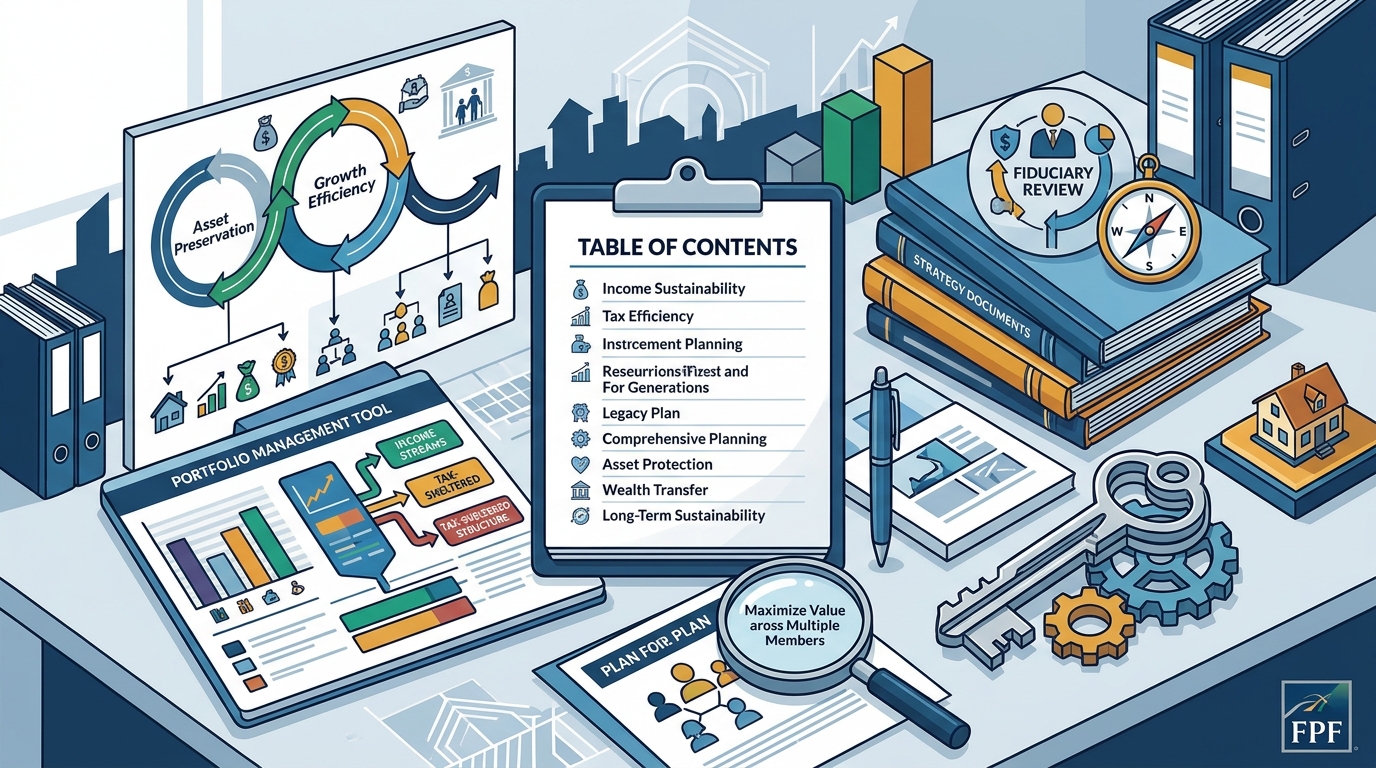
The Role of Fiduciary Guidance in Complex Planning
Fiduciary guidance is essential for navigating the complexities of significant estate planning. A fiduciary is a professional who is legally obligated to act in the best interest of the client. First Pacific Financial operates as a fee-only, fiduciary advisory firm, ensuring that all recommendations are unbiased and aligned with the client's goals. This level of trust is critical when dealing with large sums of money and complex legal structures.
The fiduciary standard provides a layer of protection that is not always present in other financial services. Unlike commission-based advisors, fiduciaries are not incentivized to sell specific products or services. This allows for a more objective and personalized approach to planning. For significant estates, this objectivity is crucial for making decisions that truly serve the client's long-term interests. It ensures that the estate plan is built on a foundation of trust and integrity.
Regular reviews and adjustments are a key part of fiduciary guidance. Life circumstances, market conditions, and tax laws can change, requiring updates to the estate plan. First Pacific Financial provides ongoing support to ensure that the plan remains relevant and effective. This proactive approach helps clients stay on track and adapt to new challenges as they arise. It is a partnership that extends beyond the initial planning phase, providing continuous support throughout the retirement journey. according to Planning for a
Key Takeaways
- Tax optimization is critical for significant estates, involving strategies like RMD management and Roth conversions.
- Wealth transfer requires coordination between financial and legal documents, including trusts and beneficiary designations.
- Asset protection strategies, such as long-term care insurance and liability shields, are essential for preserving estate value.
- Legacy goals, including philanthropy and family education, should be integrated into the financial plan.
- Fiduciary guidance ensures that all recommendations are unbiased and in the client's best interest.
- Regular reviews and adjustments are necessary to keep the estate plan aligned with changing circumstances.
Frequently Asked Questions
What is the primary benefit of using a fiduciary advisor for estate planning?
A fiduciary advisor is legally obligated to act in the client's best interest, ensuring unbiased recommendations that prioritize long-term wealth preservation and transfer.
How do Roth conversions benefit significant estates?
Roth conversions allow individuals to pay taxes on IRA assets at a lower rate during retirement, leaving a larger, tax-free asset for their heirs.
Why is long-term care planning important for high-net-worth individuals?
Long-term care costs can deplete a significant estate if not properly managed. Planning for these costs ensures that assets are preserved for heirs.
What role do trusts play in wealth transfer?
Trusts provide asset protection, control the timing of distributions, and can reduce estate tax liability, ensuring a seamless transfer of wealth.
How often should a significant estate plan be reviewed?
Estate plans should be reviewed regularly, especially after major life events or changes in tax laws, to ensure they remain aligned with the client's goals.
Conclusion
Retirement planning for significant estates is a complex process that requires a holistic approach. By integrating tax optimization, wealth transfer, asset protection, and legacy goals, individuals can ensure that their wealth is preserved and passed on effectively. First Pacific Financial provides the fiduciary guidance and expertise needed to navigate these complexities. To begin your planning journey, contact First Pacific Financial today.