

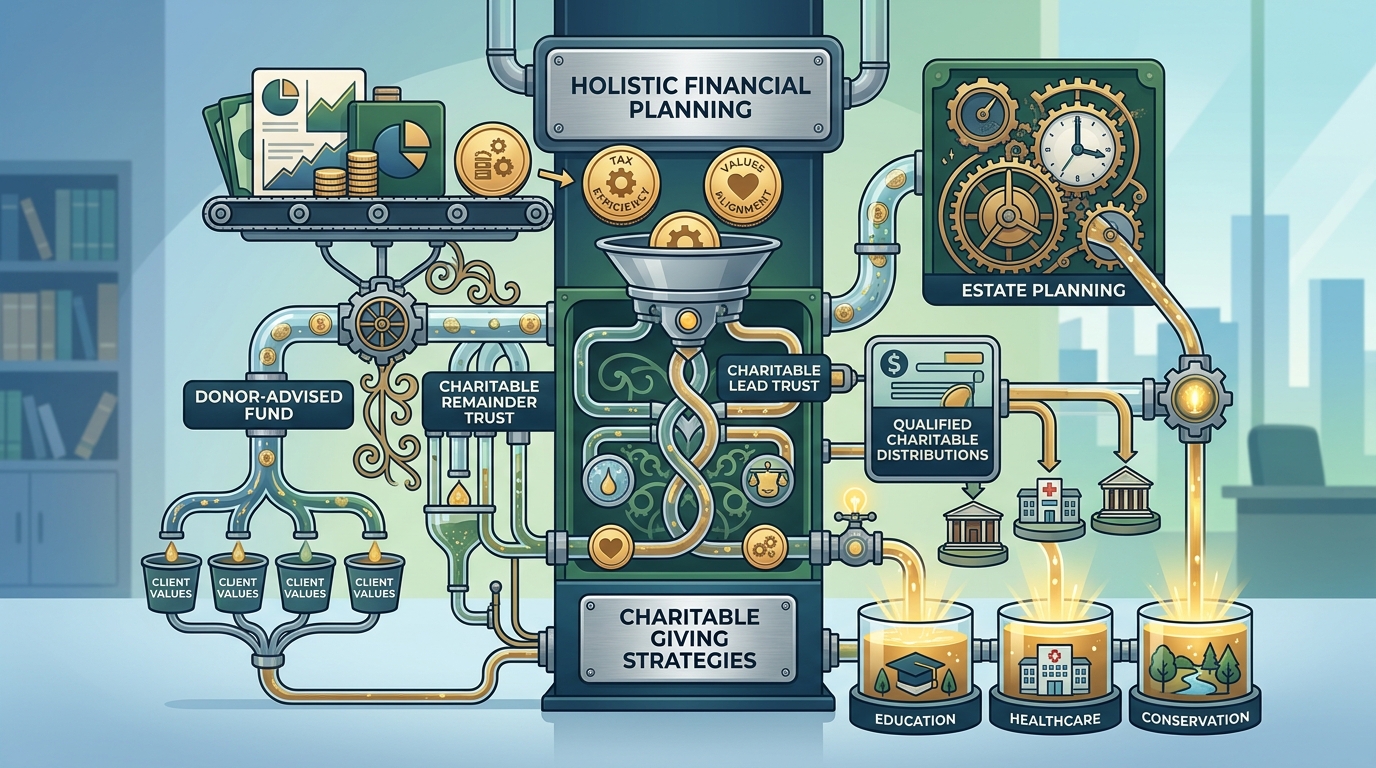
First Pacific Financial integrates charitable giving into comprehensive wealth management plans for clients in Vancouver, WA. This guide explains how donor-advised funds, charitable trusts, qualified charitable distributions, and estate planning work together to maximize tax efficiency and align giving with personal values. For additional details, review the fp financial com.
Donor-Advised Funds
A donor-advised fund (DAF) is a charitable giving vehicle that allows donors to make an irrevocable contribution to a sponsoring organization and receive an immediate tax deduction, while retaining advisory privileges over how the funds are distributed to charities over time. This structure provides flexibility for donors who wish to plan their giving over several years or who want to involve family members in the decision-making process. For additional details, review the .
Tax Benefits and Immediate Deduction
Investment Growth and Distribution
Funds held in a DAF can be invested in various asset classes, allowing the balance to grow tax-deferred before being distributed to charity. Donors can recommend grants to public charities, and many sponsors allow for multi-year giving plans. This separation of the tax deduction from the actual distribution allows for greater financial planning flexibility. For additional details, review the Customer Experience.
Charitable Trusts
A charitable trust is a legal arrangement that provides income to a non-charitable beneficiary for a specified period, after which the remaining assets are transferred to one or more charities. There are two primary types: the Charitable Remainder Trust (CRT) and the Charitable Lead Trust (CLT). These trusts are powerful tools for managing income, reducing capital gains taxes, and ensuring a legacy of giving. For additional details, review the Frequently Asked Questions.
Charitable Remainder Trusts (CRT)
In a CRT, the donor (or another non-charitable beneficiary) receives a fixed percentage of the trust's value as income for a term of years or for life. The remainder of the trust assets then goes to charity. This structure is often used to monetize highly appreciated assets without triggering immediate capital gains taxes. The IRS allows for specific deduction calculations based on the present value of the charitable remainder interest. according to Charitable Giving Statistics For additional details, review the About.
Charitable Lead Trusts (CLT)
A CLT operates in reverse, paying a fixed percentage of the trust's value to charity for a term of years, after which the remaining assets pass to non-charitable beneficiaries, such as children or grandchildren. This can be an effective way to transfer wealth to the next generation while supporting charitable causes and potentially reducing estate tax liability.
Qualified Charitable Distributions
A Qualified Charitable Distribution (QCD) is a direct transfer of funds from an Individual Retirement Account (IRA) to a qualified charity, which is excluded from the donor's gross income. This strategy is particularly valuable for individuals aged 70.5 and older, as it allows them to satisfy their Required Minimum Distributions (RMDs) while reducing their taxable income.
Reducing Taxable Income
Strategic Timing
QCDs can be made at any time during the year, but they must be made directly from the IRA to the charity. They cannot be made to donor-advised funds or private foundations. This direct transfer ensures that the funds are excluded from income, providing a clean tax benefit that is distinct from standard charitable deductions.
Estate Planning Integration
Charitable Bequests
Life Insurance and Charitable Gifts
Using life insurance to fund charitable gifts is another effective strategy. By naming a charity as the beneficiary of a life insurance policy, you can provide a significant gift without impacting your liquid assets during your lifetime. This can be particularly useful for individuals who have already maximized their annual charitable giving but wish to leave a larger legacy. according to Giving USA 2025
Comparison of Charitable Giving Strategies
| Strategy | Primary Benefit | Best For | Tax Treatment |
|---|---|---|---|
| Donor-Advised Fund | Immediate tax deduction, flexible giving | High-income years, family involvement | Deductible in year of contribution |
| Charitable Remainder Trust | Income stream, avoid capital gains | Appreciated assets, income needs | Charitable remainder interest deduction |
| Qualified Charitable Distribution | Reduce taxable income, satisfy RMDs | Individuals 70.5+, IRA holders | Excluded from gross income |
| Charitable Bequest | Legacy giving, estate tax reduction | Estate planning, long-term legacy | Deductible from gross estate |
Key Takeaways
- Donor-advised funds provide an immediate tax deduction while allowing for flexible, multi-year giving.
- Charitable trusts, such as CRTs and CLTs, can help manage income and reduce capital gains taxes on appreciated assets.
- Qualified charitable distributions allow individuals over 70.5 to reduce their taxable income by donating directly from their IRAs.
- Estate planning integration ensures that charitable giving aligns with long-term legacy goals and estate tax efficiency.
- Timing of contributions is critical, especially in high-income years or when asset values are high.
- Consulting with a fiduciary advisor ensures that charitable strategies are integrated into a holistic financial plan.
Frequently Asked Questions
What is a donor-advised fund?
A donor-advised fund is a charitable giving vehicle that allows donors to make an irrevocable contribution to a sponsoring organization and receive an immediate tax deduction, while retaining advisory privileges over how the funds are distributed to charities over time.
How do charitable trusts work?
Charitable trusts are legal arrangements that provide income to a non-charitable beneficiary for a specified period, after which the remaining assets are transferred to one or more charities. They can help manage income and reduce capital gains taxes.
What is a qualified charitable distribution?
A qualified charitable distribution is a direct transfer of funds from an IRA to a qualified charity, which is excluded from the donor's gross income. This strategy is particularly valuable for individuals aged 70.5 and older.
Can I use a donor-advised fund for estate planning?
Yes, you can name a donor-advised fund as a beneficiary in your estate plan. This allows your estate to make a charitable contribution while potentially reducing estate tax liability.
How much can I deduct for charitable contributions?
Do I need a financial advisor to set up a charitable trust?
While it is possible to set up a charitable trust without an advisor, working with a fiduciary financial advisor and an estate planning attorney is recommended to ensure that the trust is structured correctly and aligns with your overall financial and estate planning goals.
How does First Pacific Financial help with charitable giving?
First Pacific Financial integrates charitable giving strategies into comprehensive wealth management plans for clients in Vancouver, WA. Our team of fiduciary CFP® advisors helps individuals and families align their giving with their values while maximizing tax efficiency.
Conclusion
Charitable giving is a powerful tool for creating a lasting legacy while optimizing your financial plan. By understanding the various strategies available, such as donor-advised funds, charitable trusts, and qualified charitable distributions, you can make informed decisions that align with your values and financial goals. First Pacific Financial is committed to helping you navigate these strategies as part of a holistic financial plan. To discuss how charitable giving can fit into your wealth management strategy, today. Learn more: fp financial com.